Episode Transcript
[00:00:07] Speaker A: Welcome to the John Lothian News Industry Leader podcast series.
This is John Lothian.
Yesterday, while compiling the John Lothian Newsletter, I ran across a story in the New York Times titled what Trump's Embrace of Crypto has Unleashed.
The sub headline was A Boundary Pushing Array of New Crypto Ventures have Reached the Stock Market, Enticing Investors and Leading to More Risk Taking by David Yaffe Bellny and Eric Lipton. In that story was a quote from former CFTC Chairman Tim Massad, who said the line between betting, speculating and investing has has largely disappeared. It's very worrisome to me. Massad, who served as the Treasury Department's Assistant Secretary for Financial stability after the 2008 recession, is now a Research Fellow at the Harvard Kennedy School, where he also directs the Digital Asset Policy Project of the Massavar Rahmani center for Business and Government at the Kennedy School, I reached out to Chairman Massad and this podcast is the result of the interview that ensued. I asked him about his concerns about the barrier between betting, speculating and investing having largely disappeared and why this convergence was worrisome.
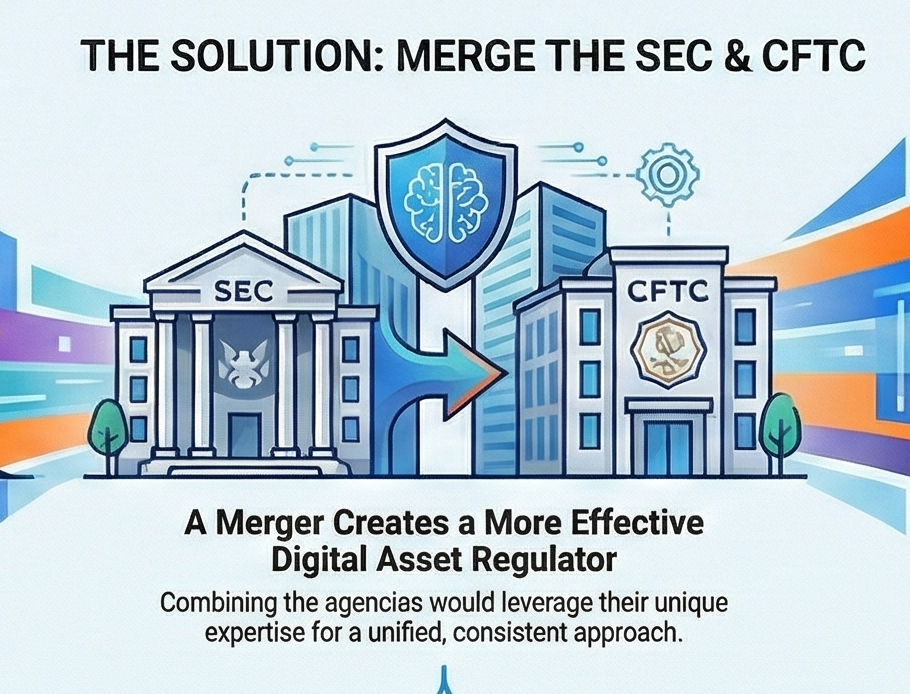
We talked about stablecoins, prediction markets, sports betting markets, and even the possibility of merging the CFTC and sec, an idea he recently wrote about in a paper titled the Best Way to Regulate Digital Assets Merge the SEC and cftc.
I also asked him what policymakers should do about this investing, trading and gambling issue.
Here is our interview.
[00:02:13] Speaker B: My name is Timothy Massad. I am currently a Research Fellow at the Harvard Kennedy School, where I also direct the Digital Assets Policy Project of the Mosava Rahmani center for Business and Government at the Kennedy School. I was previously Chair of the Commodity Futures Trading Commission and also Assistant Secretary for Financial stability at the U.S. treasury.
[00:02:40] Speaker A: So, Tim, you've said that the line between betting, speculating and investing has largely disappeared. When do you think this shift began and what key factors caused it?
[00:02:54] Speaker B: Well, maybe I would say it a little bit differently.
Look, I think there's been this very interesting evolution that has been facilitated by the Internet, by social media, and now by blockchain technologies that has created these more accessible markets. Now with blockchain, arguably permissionless and global markets, and we've seen an evolution in the types of things that people are trading.
You know, it's no longer just stocks and bonds on traditional markets, but you know, we saw People trade NFTs and meme coins and sneakers and, you know, all sorts of stuff. And I don't know that one can pinpoint exactly when this, when the line becomes blurry, I guess What I would say is, well, let me stop there. Maybe you want to ask me questions.
[00:04:01] Speaker A: Why do you find this convergence worrisome? And what risks does it pose to market integrity or investor protection?
[00:04:10] Speaker B: Yeah, let me make it clear I'm not against people buying and selling things, whether it's stocks, meme coins or sneakers or event contracts.
First of all, there's a value in learning how to trade, no matter what it is you're trading. But I think there is a difference between investing and trading. And I think there is a difference between capital markets or financial markets and the purposes they serve versus, say, betting markets. And I'm just concerned about having the right regulatory framework for different types of products and markets.
[00:04:48] Speaker A: Stablecoins are playing a growing role in global finance.
What safeguards do you think are necessary to prevent their abuse and to protect against financial crime?
[00:05:01] Speaker B: Well, we've passed the Genius act that sets up a federal regulatory framework for stablecoins.
And I think we are better off having passed the Genius act than not having passed it. However, I think the act could have been much better.
It's good in that it requires full reserves for tokens, it limits the activities of stablecoin issuers, and it provides for other regulations. We'll now have to see in the implementation phase how robust those regulations are.
I'm concerned about the speed with which we could have a problem with a stablecoin. I'm concerned about the risks that they could be used for illicit activity.
I'm concerned about the fact that I don't think the risk regulatory framework was sufficiently clear with respect to foreign issuers of US Dollar denominated stablecoins. So I think there's a number of potential risks there.
But I also think stablecoins could be very useful as a payment mechanism. I think it's good competition for our payment system.
So I support, you know, having a regulatory framework where private sector participants can develop stable coins. I just think we may have to revisit the regulatory framework.
[00:06:34] Speaker A: Back in the 30s. They didn't get it right the first time they passed.
[00:06:38] Speaker B: Exactly.
[00:06:38] Speaker A: It took 10 years or more to get all the different pieces of it together.
[00:06:44] Speaker B: Well, and you could say, you know, we've been revising it for a hundred years since. So, you know, that'll happen with stablecoins too. Yeah. The question is whether.
Whether we revisit it as a result of a problem, and is that problem a big problem or just a little problem we'll have to see.
[00:07:03] Speaker A: Yeah. How do you assess the development of the prediction markets in the US and do you see their increasing popularity as a healthy evolution or as a potential regulatory headache?
[00:07:15] Speaker B: I mean, look, I think prediction markets are very interesting phenomena. I guess it doesn't surprise me that they've grown and evolved because people enjoy participating on them.
But I do think we have to think about what the proper regulatory framework is.
Prediction markets are very different than in my mind, than capital markets or financial markets.
Capital markets or financial markets bring borrowers and savers together. They bring people who need capital together with those who can invest or lend capital. And traditional derivatives markets are different than prediction markets because they are focused on people using derivatives on commodities to hedge price risk or to discover pricing of commodities.
That's not really what prediction markets do.
And so I'm not an expert on gaming, but I do know one thing which is the CFTC is not an expert on gaming either.
So my concern has been I don't want to see the CFTC turned into the federal gaming regulator. I would prefer that it stick to its historic mission.
[00:08:37] Speaker A: Yeah, I've always defined the difference between gambling and speculation, for example, as gambling is the creation of risk that did not exist before.
I bet you I can run to the end of the street faster than you versus the assumption of risk that already existed, taking on the farmer's risk or whatever.
[00:09:01] Speaker B: Right?
[00:09:02] Speaker A: Yeah.
And there is a key difference there.
So sports related futures contracts have drawn attention under the CFTC's jurisdiction. Do you view these products as legitimate hedging tools or as a threat to the credibility of the derivatives market?
[00:09:24] Speaker B: Well, I don't know what they're hedging in the sense of, in the historic sense that we've thought of hedging in the derivatives markets. Right, because that historic meaning is that you have a commodity, whether it's corn or wheat or oil or even an interest rate where you are concerned about the risk related to its price and you want to hedge your exposure to that or you want to use derivatives as a tool for, you know, discovering that price.
I don't see that sports event contracts do anything of the sort.
So again, I'm not against them.
I just don't think, you know, that's what the CFTC was designed to do.
[00:10:23] Speaker A: You could be hedging your bets with your bookie. That's kind of like the cash market and futures together there.
[00:10:30] Speaker B: Yeah, I suppose so. But look, I mean, again, you know, it can be very entertaining to do. This can be a lot of fun. And sure, you probably do learn some skills about trading, participating in a prediction market and trading is A skill.
But again, I just think we have to distinguish the purposes of these different markets and therefore what is the proper regulatory framework for them.
[00:10:57] Speaker A: You've written about the idea of merging the CFTC and sec.
What practical benefits and challenges do you see in such a consolidation and how might it improve regulatory oversight?
[00:11:10] Speaker B: Yeah, sure. Well, you know, I wrote it in the context of it being the best way to regulate digital assets. I think it can be the best way to regulate other types of assets as well because we've seen products develop that kind of straddle the divide, if you will.
But I said it was the best way to regulate digital assets for a couple of reasons. The first was that the issue of whether to treat a digital asset as a security or a commodity can best be determined by having the two agencies with the relevant expertise, the SEC and the CFTC work together rather than trying to do it in a congressional markup. Okay. And that line drawing exercise depends a lot on use cases.
You know, is there a capital raising going on, Is there a business, what's the purpose of the offer and sale, so forth? And that classification scheme is going to evolve as the tech develops. So that's reason number one.
Reason number two is that when we talk about creating federal regulation of the spot market in digital assets that are commodities, I think that can best be done by drawing on again the expertise of both the CFTC and the sec. The CFTC brings the commodities expertise, of course, but this spot market is a retail market in large part and it will have a disclosure framework. And those are things that the SEC has far more experience with. CFTC doesn't really have experience with. Of course, CFTC does not regulate spot markets generally.
You know, I think it is appropriate to involve the CFTC here because know, we need a federal regulator and I wouldn't want to create a whole new agency. But again, I think that spot market regulation needs to draw on the experiences of the expertise of both agencies. Third reason is that when you think about what I call the back office rules involved with tokenization or using blockchains, meaning how should clearance and settlement work, how should record keeping work, how should custody work?
Those rules should be as consistent as possible whether a digital asset is a security or a commodity. There may be reasons for differences in some cases, but it shouldn't be because we have two agencies who had different views. Right?
So I'd like to see those rules be consistent. And the fourth reason was we need consistent rules to prevent illicit activity when it comes to, you know, trading or transferring digital assets. Again, whether they're securities or commodities. So those are the reasons.
There certainly are challenges to it.
There would be inefficiencies simply resulting from merging two agencies. I know some people have worried about, well, would you lose expertise? I would certainly hope not.
But again, I think it's. We've talked about merging these agencies many, many times before. It's come up every few years, frankly.
And we haven't done it in part because of the very challenging politics of it, quite frankly, because of the way the CFTC started and evolved. That was based on agricultural commodities, as you know.
And therefore the Agriculture committees of Congress were given jurisdiction. That's very important. They played a very important role in the agency's growth and oversight, whereas the SEC has been under the oversight of the banking or the Finance committees in Congress. So if you merge the two, what happens? I've suggested, well, you should figure out a way to have both sets of committees involved. And I suggested you could have a vice chair of supervision for those traditional derivatives markets, perhaps that would be overseen by the Ag committees.
So that's another challenge of doing this, is getting the politics right, because that oversight role is important.
One of the reasons I think a merger could be helpful is because, frankly, I worry that the growth of crypto, the growth of prediction markets is pulling the CFTC away from that historic mission. And I worry as to whether those, you know, traditional markets for agriculture commodities, for metals, for energy commodities, those are so important to our economy, they're so important to so many firms up and down supply chains.
We got to make sure those are getting adequate attention.
And conceivably, a merger would be a way to reassess the overall priorities of a combined agency. And for Congress to say, we really want to make sure there's a focus on those markets.
[00:16:42] Speaker A: You went right into my next question with that, which was, how do you overcome the resistance of the Senate and House oversight committees from sec?
Looking ahead, what steps should policymakers take to restore clear distinctions between betting speculation and investment in order to ensure a more stable financial system?
[00:17:07] Speaker B: Well, I, I think it's more recognizing that, that.
Things like prediction markets that are so heavily focused on, On event contracts, quote, unquote, that don't really pertain to the traditional purposes of the derivatives markets. They really are more kind of ways to reflect public opinion ways for people, you know, it is a form of entertainment. It does serve an information value as well, but it's not principally a hedging function that, you know, the regulatory issues that those pose are different and that's why I say I don't want to see the CFTC turned into a gaming regulator.
So I think we've got to think about that and think about how do you ensure a proper regulatory framework for those markets? Obviously, traditionally gaming has been the subject of state regulation and we have states who have that expertise and that, you know, are very concerned about the growth of these markets. So we've got to think about that regulatory framework.
You know, people are always going to say, oh, well, the line between speculating and investing is fuzzy. Sure, there's, there's always going to be some, some grayness there. But I think you can step back and look at overall what's principally going on in this market and what are the regulatory objectives we need to be achieving and then figure out who's best positioned to do that. Now maybe someone will say, well, you know, we still think the CFTC is the best agency to do that. Well, you better substantially increase its funding because it's really going to have to develop different types of expertise. I mean, one of the things that the prediction markets pose as a regulatory challenge, as we've seen, is so called inside information or people that have interest in a contract.
How do you address that? How do you prevent the kinds of sports betting scandals we've seen recently? I'm not an expert in that. I don't profess to know. But I do know that the cftc, at least today, I don't think really has that expertise.
And so that's why it concerns me that this is growing in a way that people expect the CFTC to regulate it as if it's the soybean futures market.
[00:20:04] Speaker A: This has been the John Lothian News Industry Leader podcast with our guest, Tim Massett. I'm your host, John Lothian. Thanks for listening and we'll see you next time.